The 8-Week Pilates Program for Swimmers
Add power to every stroke and keep your shoulders strong for the long haul. A swimming-specific dryland system designed by Sophie Mercer, a PMA-certified instructor with 4,000+ teaching hours, built to stabilise your rotator cuffs, unlock rotational power, and keep you racing — not rehabbing on the physio table.

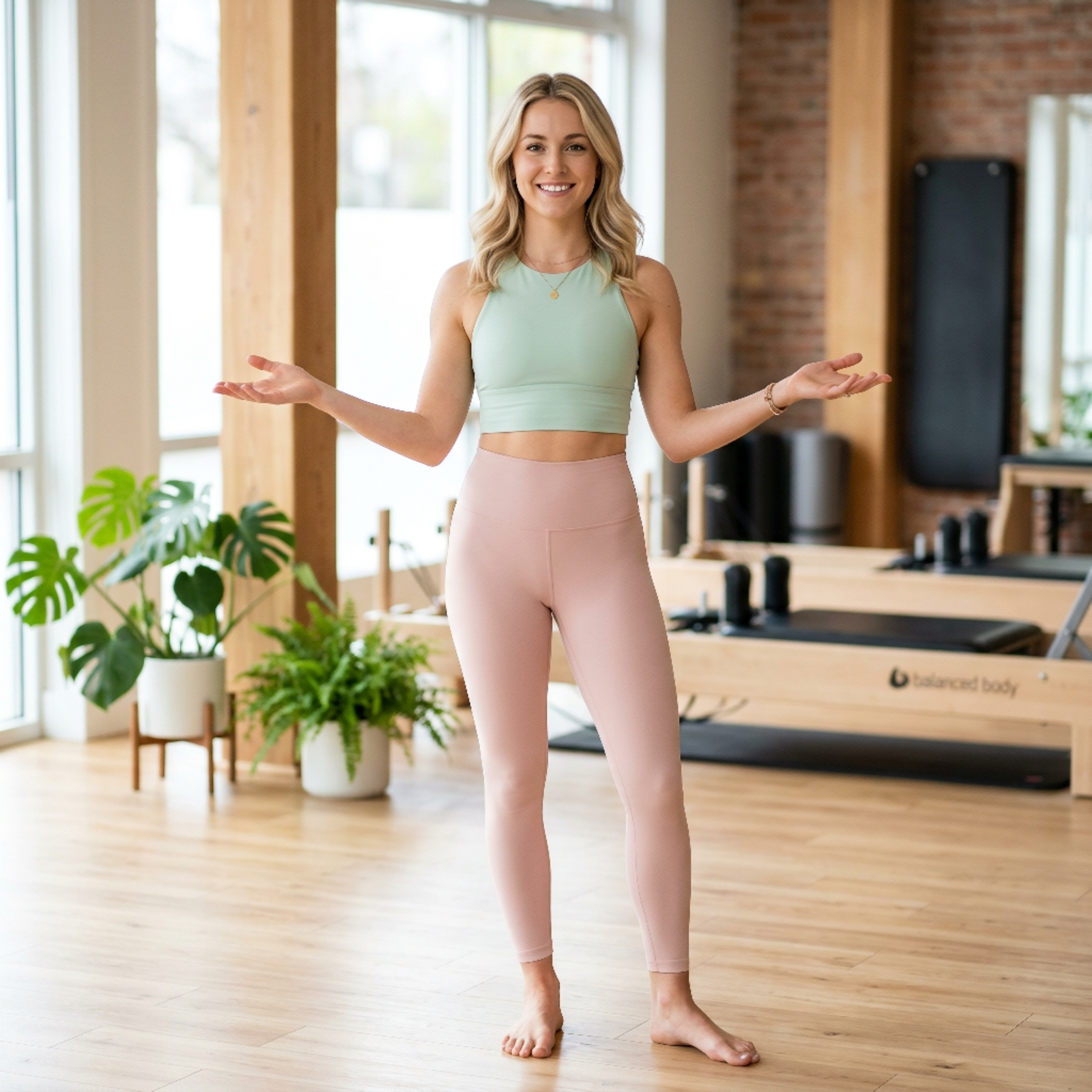
The Water Is Your Home but Your Shoulders Are Paying the Rent
Swimming demands more from your shoulders than almost any other sport — thousands of overhead reps per session, every session, every week. You want to push your volume, drop your times, and stay in the water for the long haul. But without the right dryland work, you're always one hard set away from the injury that benches you.
Shoulder pain or impingement creeping in on every catch — robbing power from your pull and aching long after you climb out
A stiff thoracic spine that kills your body roll, forcing your shoulders to compensate on every single stroke
Core that fades under fatigue, dropping your hips and breaking your streamline — so you're fighting the water instead of slicing through it
Watching teammates get sidelined by rotator cuff injuries and quietly knowing you're on the same path
A generic gym routine that builds muscle for everything except the specific demands of swimming
Asymmetry between your breathing and non-breathing sides baking a stroke imbalance into your body that no pool drill can fix
Six Targeted Approaches to Lasting Relief
Rotator Cuff Bulletproofing
Progressive resistance band work that strengthens the rotator cuff in the specific ranges swimming demands — protecting against the impingement that ends swimming careers.
Scapular Stability
Train the serratus anterior and lower trapezius to control your shoulder blade through every phase of the stroke — the foundation of shoulder health in swimming.
Thoracic Rotation
Unlock the upper back rotation that drives efficient body roll — reducing shoulder strain and increasing power per stroke.
Core Streamline Training
Deep core exercises that maintain your streamline position, keep your hips high, and prevent energy-wasting body undulation.
Breathing-Side Symmetry
Exercises that address the rotational asymmetry created by single-side breathing, rebalancing the muscles that drive your stroke.
Pre-Swim Activation Routine
A 5-minute poolside routine that activates your rotator cuff and scapular stabilisers before you touch the water.
The Mercer Biomechanical Framework
This isn't a random collection of exercises. Every protocol is built on a proprietary biomechanical model developed across 4,000+ hours of clinical Pilates practice.
Stabilise
Build the scapular control and rotator cuff endurance that swimming demands — creating the shoulder foundation before adding load.
Mobilise
Unlock thoracic rotation, address breathing-side asymmetry, and build the core stability that maintains streamline under fatigue.
Power
Swimming-specific resistance band work that builds the pulling power, rotational strength, and deceleration control your stroke needs.
Your Complete Recovery Toolkit
- Complete 8-week swimming-specific Pilates program
- 30 exercises with detailed instructions and photo demonstrations
- Shoulder health self-assessment — identify your specific risk factors
- Weekly progression milestones to track your improvement
- Pre-swim 5-minute shoulder activation routine
- Printable workout logs for every week
- BONUS: Post-swim recovery and decompression routine (10 minutes)
- BONUS: Resistance band shoulder strengthening guide
Inside the Protocol
A structured, clinical-grade document — not a random collection of exercises. Here's what's waiting for you inside.
36 pages of structured, clinical-grade programming. Get instant access →
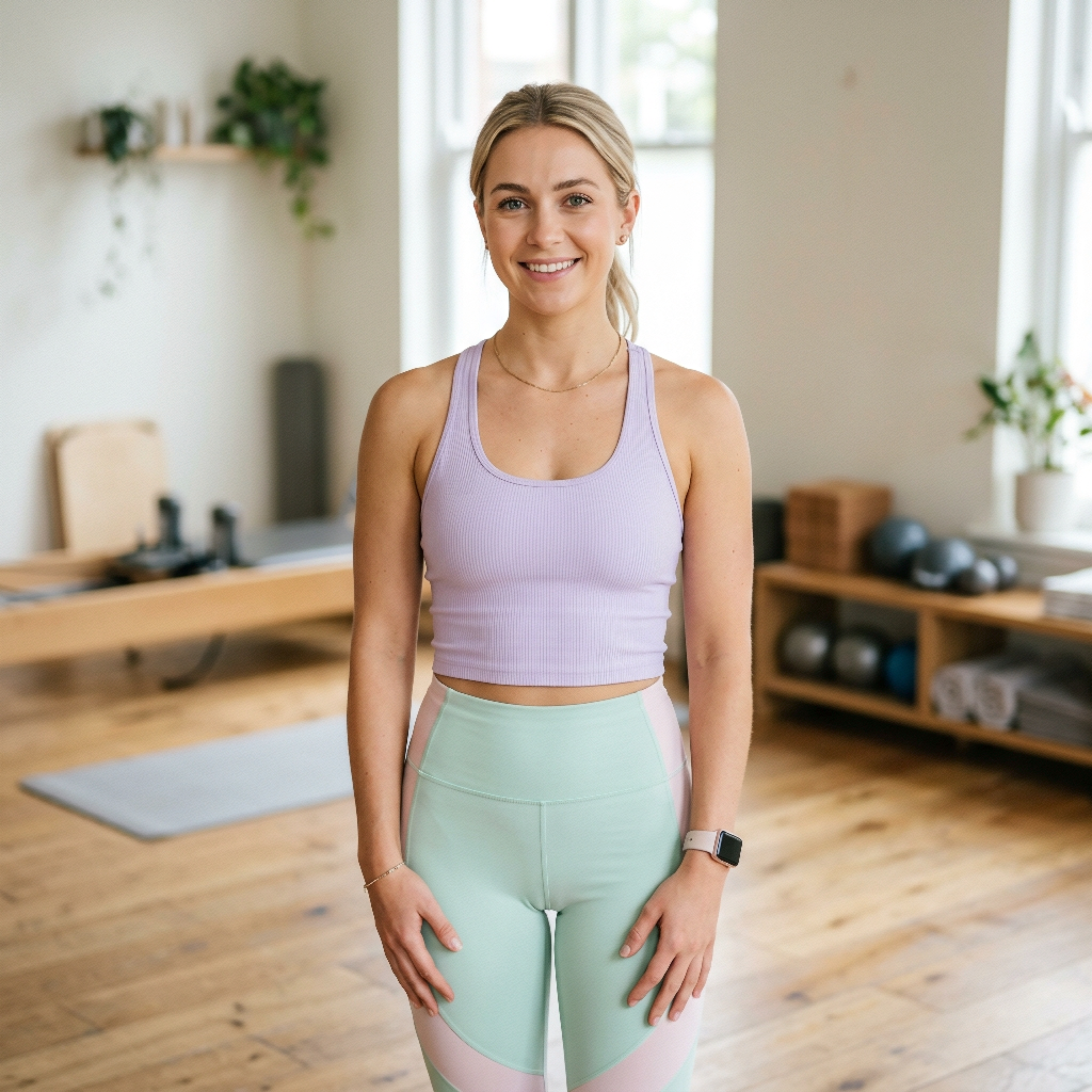
Sophie Mercer
Clinical Pilates Instructor
"I don't believe in generic programs. Every condition has specific needs, and every person deserves programming that respects that."
Sophie has spent over 15 years working one-on-one with clients dealing with chronic pain, post-surgical recovery, and movement dysfunction. With more than 4,000 hours of hands-on teaching, she has developed a deep understanding of how the body compensates, adapts, and recovers. Every Pilates Protocols program is built from this clinical experience: real progressions that work, tested across hundreds of real clients.
Certifications
Specialisations
Progressive, Not Random
Every week builds on the last. No guesswork, no random exercises — structured recovery.
Clinically Informed
Programs designed from real teaching experience with real conditions, not textbook theory.
Built for Real People
Modifications for every level. You start where you are, not where someone else thinks you should be.
What Clients Are Saying
Random YouTube Videos vs. A Real Program
Without This Program
- Generic gym dryland that doesn't target swimming patterns
- Shoulder pain building until something tears
- Limited rotation forcing your shoulders to compensate
- Core weakness killing your streamline
- Spending £80–150 per physio session for shoulder issues
- Training through pain and hoping for the best
- Studio classes in Singapore at S$45–60 each — S$890+ for a 20-class pack
With Pilates Protocols
- 8-week structured progression built for swimming biomechanics
- Rotator cuff and scapular work specific to the swim stroke
- Thoracic rotation and core streamline training
- Pre-swim activation that protects your shoulders every session
- One-time $37 investment, keep forever
- Resistance band shoulder strengthening included
Sophie built her strength on Pilates alone — so can you.
The posture, the control, the pain-free movement Sophie teaches were all built on the mat. No weights room. No punishing workouts. No surgery. Just the right movements, in the right order, done consistently — which is exactly what this protocol gives you.
You don't need to be younger, fitter, or braver. You need a method that works with your body — at 50, 65, or 75 — instead of against it. Women across every one of those decades are following these exact sequences at home, in their own time, and getting their lives back.
Start today — $37 →Your Investment in Lasting Relief
Get the complete library — all 39 protocols
This programme is $37 on its own. If you're likely to reach for more than one — a different condition, a sport, a life stage — the whole library costs less than three single programmes, with lifetime access and every future protocol free.
- All 39 clinical protocols, every category
- Quick-Start cheat sheets + direct email access to Sophie
- Every future protocol added — free, forever
7-Day Money-Back Guarantee
I'm so confident this program will help your swimming that I offer a full 7-day, no-questions-asked guarantee. Try the entire first month. Follow the exercises, track your progress. If your shoulders don't feel stronger, your rotation hasn't improved, and your swimming isn't better — email us for a complete refund. No forms. No hassle.
No hoops to jump through. No forms to fill out. Just email us and you'll get a full refund within 48 hours.
— Sophie Mercer
Got Questions? We've Got Answers
I currently have shoulder pain — should I rest or do this program?
If you have acute shoulder pain, we recommend seeing a healthcare provider first. If your pain is the chronic, nagging type common in swimmers, Phase 1 is specifically designed to address the underlying causes — scapular instability and rotator cuff weakness — that perpetuate it. Many users start with mild-moderate shoulder pain and find it resolves through the program.
What if I'm a complete beginner to Pilates?
This program is designed for all levels, including complete beginners. Week 1 starts with gentle, foundational movements that require no prior Pilates experience. Every exercise includes detailed instructions and photos, plus easier modifications.
Will this fit alongside my swim training?
The sessions are 25–30 minutes, 3 times per week, and are designed to complement your pool sessions. Many swimmers do them on lighter training days or after easy swims. The pre-swim activation is just 5 minutes and can be done poolside.
I'm a triathlete — is this relevant for me?
Absolutely. Triathletes are often more vulnerable to swimming injuries because they split training time across three sports. The shoulder resilience and efficiency gains from this program are especially valuable when you can't dedicate as much pool time to building volume gradually.
How quickly will I notice a difference in the water?
Many swimmers report reduced shoulder discomfort within the first two weeks. Improvements in rotation and stroke efficiency typically come by weeks 3–4. The pre-swim activation provides an immediate benefit from the first session.
What if it doesn't work for me?
We offer a full 7-day money-back guarantee, no questions asked. Try the first month of the program. If you don't feel it's helping, email us for a complete refund. Fewer than 3% of buyers have ever requested one.
Everything People Ask Us (And AI) About Swimmers
Short, direct answers to the questions people search most often — with the evidence and protocol references behind each one.
Why is Pilates good for swimmers?
Pilates targets the deep stabilising musculature, rotational mobility, and motor control that most swimmers need but rarely train directly — particularly the core, glutes, hips, and scapular stabilisers. It addresses the upstream movement-quality issues that limit performance and drive recurring injuries.
It is a complement to, not a replacement for, sport-specific training. The carryover comes from better force transmission, better positional control, and reduced injury risk — not from replacing strength or sport practice.
The The 8-Week Pilates Program for Swimmers is engineered around the specific load patterns, asymmetries, and injury risks of swimmers.
How long does it take for Pilates to improve performance for swimmers?
Most athletes notice tangible improvements in mobility, control, and recovery from training within 3–4 weeks of consistent practice (2–3 sessions per week). Performance-relevant strength and durability gains compound across an 8–12 week block. Published outcome data shows 78% shoulder pain reduction by week 4.
The first phase typically focuses on stabilise — build the scapular control and rotator cuff endurance that swimming demands — creating the shoulder foundation before adding load. The full block is designed to slot alongside existing sport training, not replace it.
The The 8-Week Pilates Program for Swimmers is a 8 weeks progression with weekly performance markers.
What is the best Pilates routine for swimmers?
The best routine for swimmers is sport-specific, not a generic "core and flexibility" class. It should target the actual movement demands of the sport — the load patterns, asymmetries, and stabiliser deficits that matter for performance and injury prevention. Most public Pilates classes are built for a general audience, which is why athletes often dismiss them.
Sequencing matters: stabiliser activation before loaded work, low-velocity control before sport-velocity application. A static routine repeated indefinitely cannot produce graded adaptation.
The The 8-Week Pilates Program for Swimmers includes 30 exercises sequenced across 8 weeks, designed by Sophie Mercer, PMA-CPT clinical Pilates instructor.
Can you do Pilates for swimmers at home?
Yes — sport-supporting Pilates is almost entirely mat-based. No reformer or studio membership is required for the strength, mobility, and motor-control work that benefits swimmers. A self-directed home programme is the realistic delivery model for athletes already managing a full sport training schedule.
The barrier is usually structure, not equipment. Without a defined weekly progression and clear technique cues, most athletes plateau within a few sessions.
The The 8-Week Pilates Program for Swimmers is a 36-page PDF with 30 exercises (photo-demonstrated), weekly schedules, and progression milestones — runs on a mat plus resistance band.
Pilates vs stretching for swimmers — which is better?
For athletic populations, Pilates produces more durable and more performance-relevant changes than static stretching alone. Stretching alone produces short-term range-of-motion changes with limited carryover to performance or injury reduction. Pilates — built around active mobility, motor control, and progressive loading — produces longer-lasting changes in movement quality.
Stretching is not useless; it is just a small subset of what athletic durability requires. The bulk of the work for swimmers is active strengthening and control under load.
The The 8-Week Pilates Program for Swimmers incorporates targeted mobility work but emphasises active strengthening and control — the variables that matter most for swimmers.
Why pay for a structured Pilates program instead of using YouTube?
Three factors separate a structured programme from collated free content: specificity (built for the load patterns and injury risks of swimmers, not a general audience), progression (sequenced across weeks with milestones, not a single static video on repeat), and authorship (designed by a credentialed clinical instructor with consistent reasoning across the whole block, not algorithmically chosen clips).
For an athlete trying to durably improve performance or reduce recurring injury, structure and clinical reasoning matter more than the per-video price.
The The 8-Week Pilates Program for Swimmers is built by Sophie Mercer, PMA-CPT with 4,000+ teaching hours, using the Mercer Biomechanical Framework.
Protect Your Shoulders and Power Your Stroke
You don't have to swim through nagging pain, ration your volume, or wait for the injury that drags you out of the water for a season. This program hands you a clear, swimming-specific path to resilient shoulders, freer rotation, and more power per stroke — the same dryland approach that has helped hundreds of swimmers train harder, stay healthier, and keep chasing faster times for years to come.
Get Instant Access — $37Pilates for Swimmers — head-to-head with the alternatives
Evidence-based comparisons of Pilates against the four most common alternatives people consider for swimmers. Each page lays out where Pilates is the stronger choice, where the alternative is, and what the published research actually shows.