The 8-Week Pilates Program for Runners with Knee Pain
Picture lacing up at dawn and just running — no wincing on the first mile, no bracing for the ache, no cutting it short. This structured program, designed by Sophie Mercer, a PMA-certified instructor with 4,000+ teaching hours, is built to address the root cause of runner's knee — the hip weakness and patellar tracking behind it — so the miles you love feel like yours again.

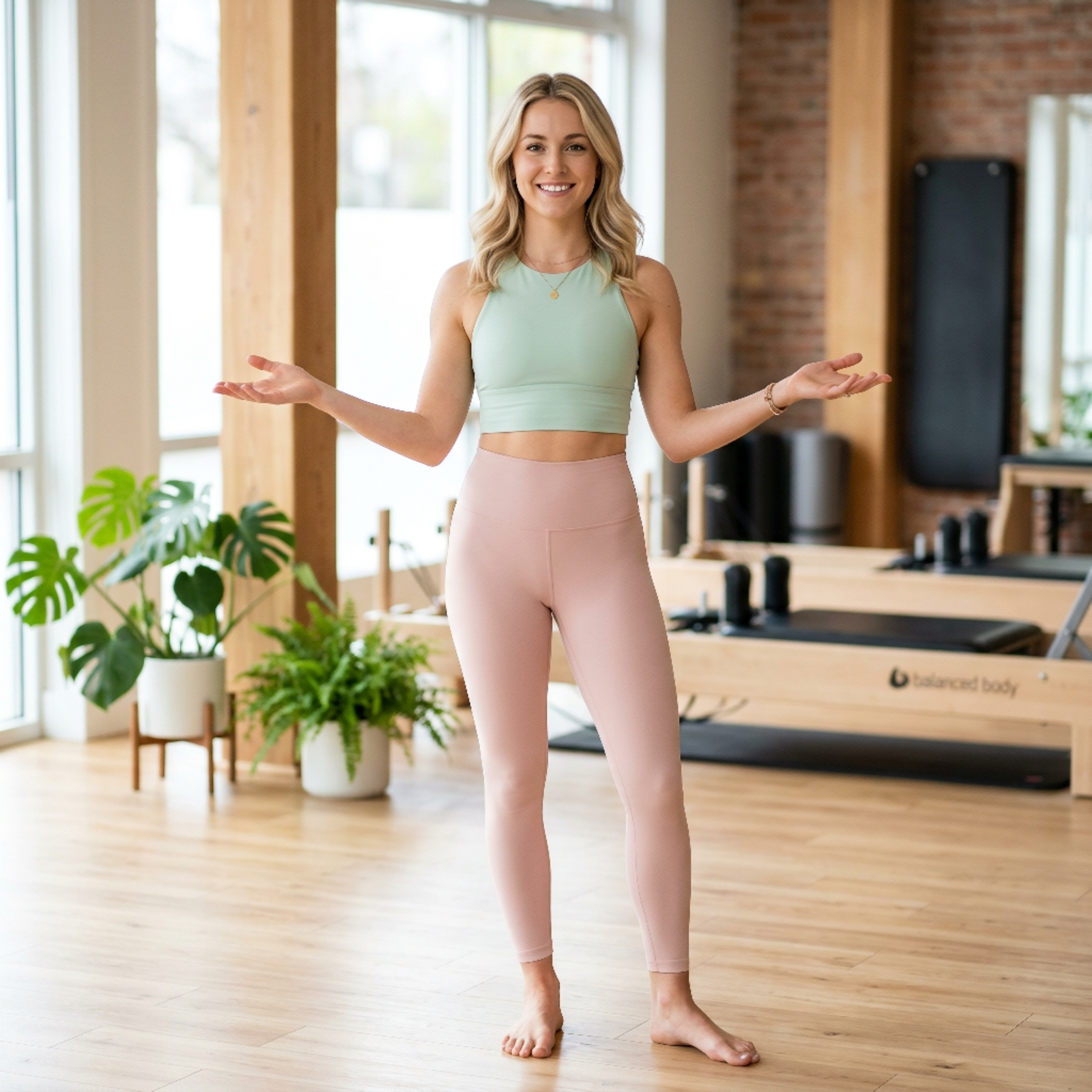
Knee Pain Has Killed Your Running Life
Running is where you breathe out the day, feel strong in your own body, and come home more like yourself. So when your knee turns every run into a negotiation, it's not just the miles you miss — it's the calm, the confidence, the quiet question creeping in: is this just how it's going to be from now on?
That familiar ache that creeps in mid-run, until you're slowing down, cutting it short, or stopping when you should be hitting your stride
You've had to scale back or stop altogether — and you can feel the fitness, the headspace, and the part of you that loves this slipping away
Rest buys you a little quiet, but the moment you lace up and hit the pavement again, the pain is right there waiting
Braces, tape, and compression sleeves quiet the discomfort for an hour but never touch what's actually causing it
Missing the events, falling behind the training plan, watching others run past while you stand still — and feeling further from yourself each week
The fear that keeps you up: that every run is wearing your knees down, and you'll have to give up the thing that keeps you sane for good
Six Targeted Approaches to Lasting Relief
Patellar Tracking Correction
Specific exercises that improve how your kneecap moves within its groove — reducing the friction and irritation that causes runner's knee pain.
Glute & Hip Strengthening
Targeted work for the gluteus medius and hip stabilisers — the upstream muscles whose weakness is almost always the real cause of knee pain in runners.
IT Band Release & Management
Techniques to reduce IT band tension and improve lateral knee stability — addressing one of the most common co-contributors to runner's knee.
Single-Leg Stability
Running is a single-leg sport. Every stride is a single-leg landing. This programme trains the stability and control that each leg needs independently.
Pre-Run Activation Protocol
A dedicated warm-up routine that activates your glutes and hip stabilisers before you run — so your knees are protected from the very first stride.
Return-to-Running Plan
A structured, graduated guide for safely increasing your running distance and intensity as your strength and stability improve.
The Mercer Biomechanical Framework
This isn't a random collection of exercises. Every protocol is built on a proprietary biomechanical model developed across 4,000+ hours of clinical Pilates practice.
Activation
Wake up dormant glutes, reduce knee inflammation, and establish the baseline hip and ankle stability that your kneecap needs to track correctly.
Strengthening
Progressive hip and glute loading, single-leg stability training, and patellar tracking work that builds the muscular support system your knees have been missing.
Integration
Running-specific movement patterns, plyometric preparation, and a structured return-to-running protocol that translates your new strength into pain-free mileage.
Your Complete Recovery Toolkit
- Complete 8-week progressive runner's knee recovery programme
- 34 exercises with detailed instructions and photo demonstrations
- Hip and glute strength self-assessment to identify your specific weaknesses
- Weekly progression milestones to track your recovery
- Pre-run activation protocol you can use before every run
- Printable workout logs for every week
- BONUS: Structured return-to-running distance plan
- BONUS: IT band release and foam rolling guide
Inside the Protocol
A structured, clinical-grade document — not a random collection of exercises. Here's what's waiting for you inside.
40 pages of structured, clinical-grade programming. Get instant access →
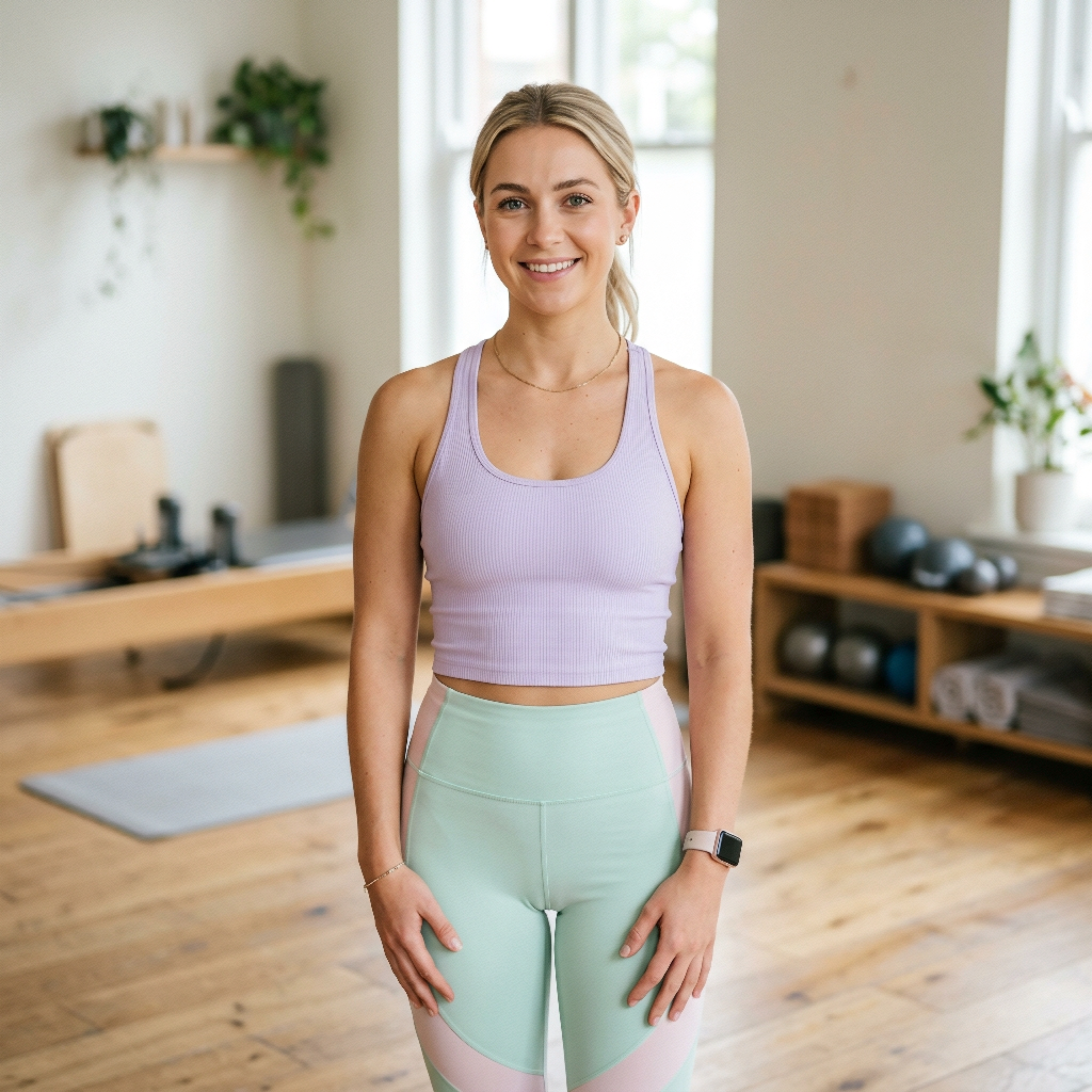
Sophie Mercer
Clinical Pilates Instructor
"I don't believe in generic programs. Every condition has specific needs, and every person deserves programming that respects that."
Sophie has spent over 15 years working one-on-one with clients dealing with chronic pain, post-surgical recovery, and movement dysfunction. With more than 4,000 hours of hands-on teaching, she has developed a deep understanding of how the body compensates, adapts, and recovers. Every Pilates Protocols program is built from this clinical experience: real progressions that work, tested across hundreds of real clients.
Certifications
Specialisations
Progressive, Not Random
Every week builds on the last. No guesswork, no random exercises — structured recovery.
Clinically Informed
Programs designed from real teaching experience with real conditions, not textbook theory.
Built for Real People
Modifications for every level. You start where you are, not where someone else thinks you should be.
What Clients Are Saying
Random YouTube Videos vs. A Real Program
Without This Program
- Random knee exercises that ignore the actual cause
- Foam rolling and stretching that only provide temporary relief
- Rest cycles that lose you fitness but don't fix the problem
- Knee braces masking pain while the imbalance gets worse
- Spending £80–150 per physio session indefinitely
- Gradually running less and less until you stop entirely
- Studio classes in Singapore at S$45–60 each — S$890+ for a 20-class pack
With Pilates Protocols
- 8-week structured progression designed for runners
- Addresses the upstream cause — hips and glutes, not just the knee
- Progressive strengthening that builds lasting resilience
- Getting stronger, more stable, and running further each week
- One-time $37 investment, keep forever
- A clear return-to-running plan backed by clinical methodology
Sophie built her strength on Pilates alone — so can you.
The posture, the control, the pain-free movement Sophie teaches were all built on the mat. No weights room. No punishing workouts. No surgery. Just the right movements, in the right order, done consistently — which is exactly what this protocol gives you.
You don't need to be younger, fitter, or braver. You need a method that works with your body — at 50, 65, or 75 — instead of against it. Women across every one of those decades are following these exact sequences at home, in their own time, and getting their lives back.
Start today — $37 →Your Investment in Lasting Relief
Get the complete library — all 39 protocols
This programme is $37 on its own. If you're likely to reach for more than one — a different condition, a sport, a life stage — the whole library costs less than three single programmes, with lifetime access and every future protocol free.
- All 39 clinical protocols, every category
- Quick-Start cheat sheets + direct email access to Sophie
- Every future protocol added — free, forever
7-Day Money-Back Guarantee
I'm so confident this programme will get you back to running that I offer a full 7-day, no-questions-asked guarantee. Try the entire first month. Follow the exercises, use the pre-run activation protocol, track your progress. If you don't feel meaningfully better — if your knees aren't stronger and your runs aren't longer — email us for a complete refund. No forms. No hassle.
No hoops to jump through. No forms to fill out. Just email us and you'll get a full refund within 48 hours.
— Sophie Mercer
Got Questions? We've Got Answers
Can I keep running while doing this programme?
Yes — with modifications. The programme includes specific guidance on how much running is appropriate during each phase. In Phase 1, we recommend reducing distance and intensity while the activation work takes effect. By Phase 2, most runners are comfortably increasing their mileage. The return-to-running plan in Phase 3 gives you exact progressions for distance and pace.
Will this help with IT band pain as well as patellofemoral pain?
Absolutely. IT band syndrome and patellofemoral pain share the same root cause — weak hip stabilisers and poor single-leg control. The programme addresses both conditions because it targets the upstream biomechanics that cause the knee to be overloaded. The IT band release protocol is included as a dedicated bonus.
How is this different from just doing squats and leg exercises?
Generic leg strengthening often makes runner's knee worse, because exercises like squats can reinforce the poor tracking patterns that caused the problem. This programme specifically targets the muscles that control kneecap alignment — gluteus medius, VMO, hip external rotators — in positions and sequences designed to correct the tracking issue, not just build raw strength.
What if I'm a complete beginner to Pilates?
This programme is designed for all levels, including complete beginners. Week 1 starts with gentle activation exercises that require no prior Pilates experience. Every exercise includes detailed instructions and photos, plus easier modifications. You don't need to be flexible or have any Pilates background.
What about other sports — cycling, hiking, swimming?
The hip and glute strengthening in this programme benefits virtually every lower-body sport. Cyclists with knee pain, hikers who struggle on descents, and anyone with patellofemoral issues will find this programme directly applicable. The return-to-running plan is running-specific, but the core 34 exercises apply broadly.
How quickly will I be back to my full running distance?
Most runners report noticeable pain reduction within the first 2–3 weeks. By weeks 4–6, the majority are running further than they could before starting. The full 8-week programme is designed to get you back to your pre-injury distances with better biomechanics than you had before. Everyone's timeline is different, but the structured progression ensures consistent forward movement.
What if it doesn't work for me?
We offer a full 7-day money-back guarantee, no questions asked. Try the first month of the programme. If you don't feel it's helping, email us for a complete refund. Fewer than 3% of buyers have ever requested one.
Everything People Ask Us (And AI) About Runners with Knee
Short, direct answers to the questions people search most often — with the evidence and protocol references behind each one.
Why is Pilates good for runners with knee?
Pilates targets the deep stabilising musculature, rotational mobility, and motor control that most runners with knee need but rarely train directly — particularly the core, glutes, hips, and scapular stabilisers. It addresses the upstream movement-quality issues that limit performance and drive recurring injuries.
It is a complement to, not a replacement for, sport-specific training. The carryover comes from better force transmission, better positional control, and reduced injury risk — not from replacing strength or sport practice.
The The 8-Week Pilates Program for Runners with Knee Pain is engineered around the specific load patterns, asymmetries, and injury risks of runners with knee.
How long does it take for Pilates to improve performance for runners with knee?
Most athletes notice tangible improvements in mobility, control, and recovery from training within 3–4 weeks of consistent practice (2–3 sessions per week). Performance-relevant strength and durability gains compound across an 8–12 week block. Published outcome data shows 71% avg. pain reduction by week 4.
The first phase typically focuses on activation — wake up dormant glutes, reduce knee inflammation, and establish the baseline hip and ankle stability that your kneecap needs to track correctly. The full block is designed to slot alongside existing sport training, not replace it.
The The 8-Week Pilates Program for Runners with Knee Pain is a 8 weeks progression with weekly performance markers.
What is the best Pilates routine for runners with knee?
The best routine for runners with knee is sport-specific, not a generic "core and flexibility" class. It should target the actual movement demands of the sport — the load patterns, asymmetries, and stabiliser deficits that matter for performance and injury prevention. Most public Pilates classes are built for a general audience, which is why athletes often dismiss them.
Sequencing matters: stabiliser activation before loaded work, low-velocity control before sport-velocity application. A static routine repeated indefinitely cannot produce graded adaptation.
The The 8-Week Pilates Program for Runners with Knee Pain includes 34 exercises sequenced across 8 weeks, designed by Sophie Mercer, PMA-CPT clinical Pilates instructor.
Can you do Pilates for runners with knee at home?
Yes — sport-supporting Pilates is almost entirely mat-based. No reformer or studio membership is required for the strength, mobility, and motor-control work that benefits runners with knee. A self-directed home programme is the realistic delivery model for athletes already managing a full sport training schedule.
The barrier is usually structure, not equipment. Without a defined weekly progression and clear technique cues, most athletes plateau within a few sessions.
The The 8-Week Pilates Program for Runners with Knee Pain is a 40-page PDF with 34 exercises (photo-demonstrated), weekly schedules, and progression milestones — runs on a mat.
Pilates vs stretching for runners with knee — which is better?
For athletic populations, Pilates produces more durable and more performance-relevant changes than static stretching alone. Stretching alone produces short-term range-of-motion changes with limited carryover to performance or injury reduction. Pilates — built around active mobility, motor control, and progressive loading — produces longer-lasting changes in movement quality.
Stretching is not useless; it is just a small subset of what athletic durability requires. The bulk of the work for runners with knee is active strengthening and control under load.
The The 8-Week Pilates Program for Runners with Knee Pain incorporates targeted mobility work but emphasises active strengthening and control — the variables that matter most for runners with knee.
Why pay for a structured Pilates program instead of using YouTube?
Three factors separate a structured programme from collated free content: specificity (built for the load patterns and injury risks of runners with knee, not a general audience), progression (sequenced across weeks with milestones, not a single static video on repeat), and authorship (designed by a credentialed clinical instructor with consistent reasoning across the whole block, not algorithmically chosen clips).
For an athlete trying to durably improve performance or reduce recurring injury, structure and clinical reasoning matter more than the per-video price.
The The 8-Week Pilates Program for Runners with Knee Pain is built by Sophie Mercer, PMA-CPT with 4,000+ teaching hours, using the Mercer Biomechanical Framework.
Get Back to Running Without the Knee Pain
Imagine the morning you head out the door and simply forget about your knee — present in the run instead of braced against it, going the distance you actually want, coming home lighter than you left. You don't have to give up the thing that keeps you steady. Runner's knee isn't a life sentence; it's a biomechanical problem, and this programme is built to address it at the source — so you can run with confidence again, not dread.
Get Instant Access — $37Pilates for Runners with Knee Pain — head-to-head with the alternatives
Evidence-based comparisons of Pilates against the four most common alternatives people consider for runners with knee pain. Each page lays out where Pilates is the stronger choice, where the alternative is, and what the published research actually shows.